How To Clean A Mattress With A Steam Cleaner: 2026 Best Guide
Cleaning a mattress with a steam cleaner kills dust mites, bacteria, and odors while deep sanitizing fibers, and the process is safe when you use low moisture, keep the steam moving, and let the mattress dry fully before putting sheets back on.
I still remember the first time I pulled a rented steam cleaner out of the back of my SUV for a client who swore her mattress was "ruined." Three years, two kids, one dog, and a mystery stain later, I was about to find out if steam really could rescue a bed. Spoiler: it did, and it became one of my favorite tools. Since then, I have steamed memory foam, innerspring, latex, and even a hybrid pillow-top that had seen better days, and I have learned exactly what works, what does not, and what can actually damage your mattress. Let me walk you through the whole process the way I wish someone had walked me through it on day one.
What a Steam Cleaner Actually Does to a Mattress
A steam cleaner heats water to around 212°F and pushes it out as low-moisture vapor. That heat is the real hero. It breaks down body oils, sweat, allergens, and bacteria on contact, and the gentle suction or microfiber attachment lifts the loosened grime away. The mattress is not soaked, just warmed and refreshed. Think of it like giving your bed a hot, detoxifying shower instead of a bath.
Why Steam Cleaning Is Worth It
Your mattress is a magnet for things you cannot see. The average person sheds about half a pound of skin a year, and that becomes food for dust mites. Add in sweat, pet dander, and the occasional spill, and you have a pretty active ecosystem. Steam cleaning tackles several problems at once.
- Kills dust mites and their allergens
- Neutralizes odors caused by bacteria and body oils
- Removes light surface stains from sweat, urine, or food
- Refreshes fibers without harsh chemicals
- Safe for most mattress types when done correctly
A study from The Ohio State University found that steam can reduce dust mite populations by more than 90% when used at the right temperature, which is a big deal if you deal with allergies or asthma.

What You Will Need
Before you start, gather your tools. Having everything ready makes the job faster and prevents you from leaving a wet spot sitting too long.
- A garment or upholstery steam cleaner with a fabric or upholstery attachment
- Clean white microfiber cloths
- A vacuum cleaner with a brush attachment
- Baking soda
- Distilled water (if your machine allows it, to prevent mineral buildup)
- Optional: a small bowl of hydrogen peroxide and dish soap for pre-treating stains
Step by Step: How to Clean a Mattress With a Steam Cleaner
Step 1: Strip the Bed and Vacuum First
Take off all sheets, pillowcases, mattress pads, and protectors. Toss the linens straight into the wash. Then vacuum the entire mattress using the upholstery attachment. Pay extra attention to seams, tufts, and the edges where crumbs and skin cells love to hide. This step alone removes a surprising amount of loose debris, and it stops the steam from pushing dirt deeper into the fabric.
Step 2: Pre-Treat Any Stains
If you see yellow sweat marks, urine spots, or old spills, give them a quick pre-treatment. Mix one tablespoon of dish soap, one tablespoon of hydrogen peroxide, and a little baking soda into a paste. Gently dab it on the stain and let it sit for about 10 minutes. Blot, do not rub. Rubbing grinds the stain deeper into the fibers and can damage the cover.
Step 3: Sprinkle Baking Soda
Before steaming, dust the whole mattress with a thin, even layer of baking soda. This is one of my favorite tricks. Baking soda neutralizes acidic odors and gives the steam something to work against. Let it sit for 15 to 30 minutes while your steam cleaner heats up. If you can, open a window or turn on a fan to keep air moving.
Step 4: Steam the Mattress
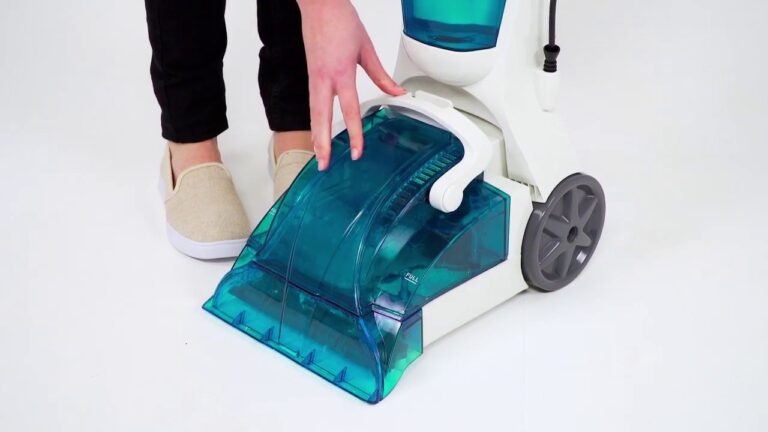
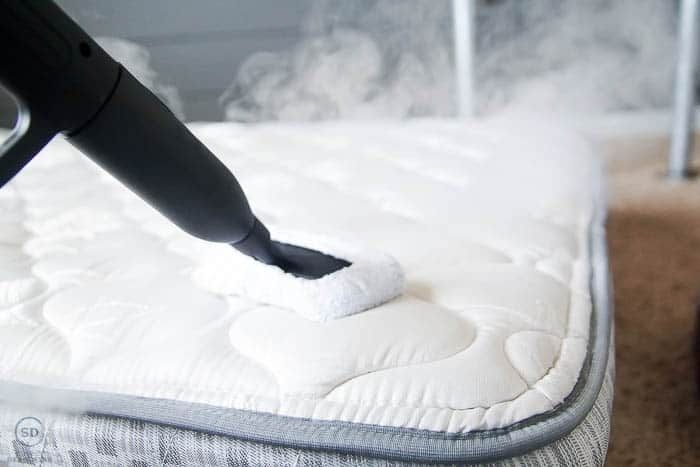
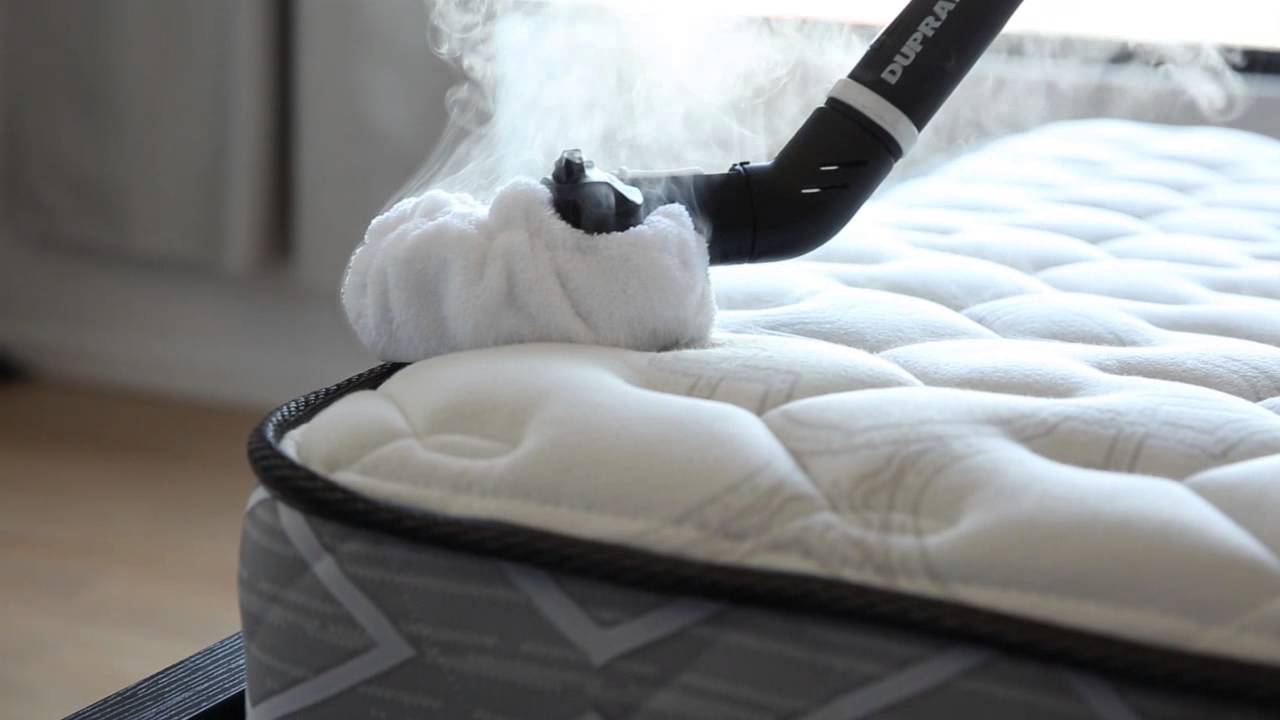
Fill the steam cleaner with water, attach the fabric or upholstery tool, and start at the top of the mattress near the head. Work in slow, overlapping rows, moving down the surface. Keep the nozzle moving. Holding it in one spot can over-wet the fabric or leave heat marks, especially on memory foam. The goal is light steam exposure, not a deep soak. You will see the surface slightly dampen and then almost immediately start to dry.
Pay special attention to:
- The middle third, where most body weight lands
- The edges, where people roll and sweat
- Any stained areas you pre-treated
Step 5: Blot and Dry
After steaming a section, immediately press a clean, dry microfiber cloth into the area to absorb excess moisture. Do not press hard. Just lay the cloth down and pat gently. Steam cleaning leaves very little water behind, but a little extra drying goes a long way toward preventing mildew. If your machine has a suction feature, run it over the surface to pull out even more moisture.
Step 6: Vacuum Again and Air Out
Once the whole mattress is steamed, give it another pass with the vacuum to lift any leftover baking soda and dried residue. Then let the mattress dry completely before putting sheets back on. This usually takes 2 to 4 hours, depending on humidity and airflow. I tell my clients to leave the bedroom door open, point a fan at the bed, or even set the mattress on its side for 20 minutes to speed things up.
Step 7: Protect the Mattress
When the mattress is fully dry, put on a washable mattress protector. This single step can double the time between deep cleanings and keeps dust, sweat, and spills from reaching the surface.
Steam Cleaning Different Mattress Types
Not every mattress reacts the same way to steam. Here is what I have learned through trial, error, and a few close calls.
Memory Foam and Polyfoam
Memory foam is sensitive to heat and moisture. Use the lowest effective steam setting, keep the nozzle moving, and never soak it. Too much water can break down the foam's structure or trap moisture inside, leading to mold. If your foam mattress is more than a few years old and the cover is not removable, consider spot steaming instead of full-surface steaming.
Innerspring and Hybrid
These are the most forgiving. The open structure breathes well and dries quickly. You can use slightly more steam here without worry, though you still want to avoid puddles. Innerspring mattresses also tend to be heavier, so make sure your floor can handle the weight of a wet bed.
Latex
Latex is naturally antimicrobial, so it does not need as much cleaning. Steam is safe, but use low heat and quick passes. High heat can cause some natural latex to degrade over time, so go easy.
Pillow-Top and Euro-Top
The extra cushioning layer can trap moisture. Use shorter steam bursts and blot more aggressively. These mattresses also take longer to dry, so give them extra time.
/how-to-steam-clean-a-mattress-5101192-hero-0a1a68a684094d4588f265761ec6fbc6.jpg)
Common Mistakes to Avoid
I have made a few of these myself, so learn from my errors.
- Over-wetting the surface. If you see dark spots or feel real dampness, you are using too much steam or holding the nozzle too long.
- Skipping the vacuum. Dust and baking soda turn into paste when steamed, and that paste stains the fabric.
- Putting sheets on too soon. Even a slightly damp mattress under bedding is a recipe for mildew and smell.
- Using the wrong attachment. A hard brush or carpet tool can snag mattress fabric. Always use a soft, flat upholstery or fabric tool.
- Steaming a mattress with a damaged cover. If the cover is torn or the foam is exposed, you can force water into the core. Spot clean only or call a pro.
When to Call a Professional
If your mattress has been soaked by a major flood, has heavy mold growth, or has structural damage like deep sagging or exposed foam, a home steam cleaner may not be enough. Professional mattress cleaners have commercial-grade equipment and can often dry a mattress faster and more thoroughly. The same goes for antique or very high-end mattresses where you do not want to risk anything.
How Often You Should Steam Clean Your Mattress
For most people, a deep steam cleaning every 4 to 6 months is plenty. If you have allergies, asthma, pets, or kids who treat the bed like a trampoline, aim for every 2 to 3 months. Regular vacuuming and a good mattress protector will keep things fresh in between.
Frequently Asked Questions
Can steam cleaning damage a mattress?
Yes, if done incorrectly. Too much heat, too much moisture, or holding the steam in one spot can warp memory foam, damage adhesives, or leave moisture trapped inside. The key is to use a low-moisture setting, keep the nozzle moving, and let the mattress dry fully before use.
How long does a mattress take to dry after steam cleaning?
Typically 2 to 4 hours in a well-ventilated room. Fans, open windows, and low humidity speed things up. You can also flip the mattress on its side for a few minutes to release trapped moisture. Never put sheets on a damp mattress.
Is steam cleaning safe for memory foam mattresses?
It can be, but you need to be careful. Use the lowest steam setting, keep the attachment a few inches from the surface, and never saturate the foam. Some manufacturers void the warranty if you use any liquid or steam, so check your care guide first.
Does steam cleaning remove urine smell from a mattress?
Steam alone may not fully eliminate old urine odor, especially if it has soaked into the core. Pre-treat the area with an enzyme cleaner or the baking soda paste I mentioned earlier, then steam. For severe cases, you may need to repeat the process or consider a professional cleaning.
Can I use a handheld garment steamer instead of an upholstery steam cleaner?
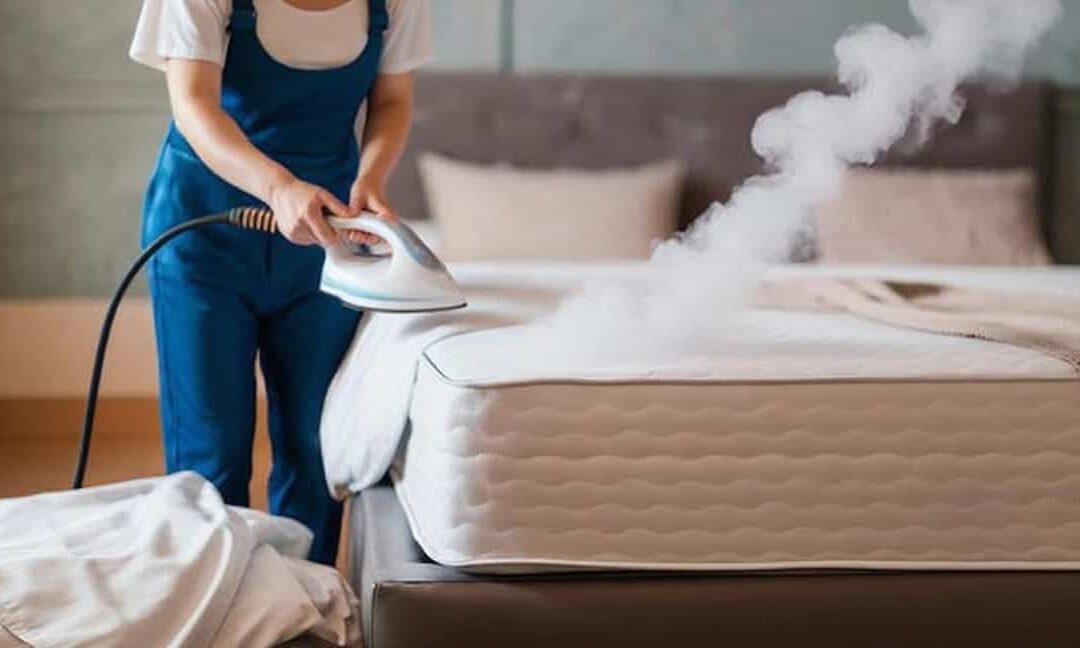
You can for light refreshening, but handheld garment steamers have very low pressure and minimal suction. They will not deep clean the way an upholstery or carpet steam cleaner will. They are fine for surface sanitizing and light odor removal, but not for serious stains or deep cleaning.
A clean mattress is one of those things you do not think about until you sleep on a fresh one, and then you wonder why you waited so long. Steam cleaning is one of the most effective ways to refresh your bed without drenching it or filling your home with chemicals. Start with a good vacuum, use a light touch, give it time to dry, and protect it afterward. Your bed will feel newer, smell fresher, and honestly, you will sleep better knowing exactly what is, and is not, living in your sheets. If you have a stubborn stain or a tricky mattress type, drop your question in the comments and I will help you figure it out.