How To Clean Mattress With Steam Cleaner: 2026 Best Guide
Steam cleaning your mattress deep sanitizes it, kills dust mites, and removes stubborn stains using high-temperature vapor in just a few simple steps. If you've been waking up with allergies, noticing yellow stains, or simply can't remember the last time you gave your bed a proper deep clean, you're not alone. Most people vacuum their sheets and flip their mattress, but few realize that the real grime hiding inside requires the power of steam.
I've tested dozens of cleaning methods on my own mattresses over the years, from baking soda pastes to enzymatic sprays, and nothing comes close to the results a good steam cleaner delivers. It's fast, chemical-free, and honestly a little satisfying to watch years of dust and sweat get pulled out of something you spend a third of your life on. In this guide, I'll walk you through exactly how to clean your mattress with a steam cleaner, share the mistakes I made the first time, and give you pro tips that actually make a difference.
Why Steam Cleaning Is the Best Method for Mattress Deep Cleaning
Steam cleaning stands out from other mattress cleaning methods because it uses nothing but high-temperature water vapor to do the heavy lifting. Most home steamers heat water to around 212°F (100°C), and that heat alone is enough to kill dust mites, bacteria, and even some mold spores on contact. You don't need harsh chemicals, which is a huge plus if you have kids, pets, or sensitive skin like I do.
When I first tried steam cleaning, I was shocked at how much discoloration showed up on my white microfiber cloth as I wiped the surface. That was years of dead skin cells, body oils, and dust mite debris coming up from a mattress that looked clean. It's the kind of thing that makes you rethink what "clean" really means.
Another reason steam works so well is that it penetrates deep into the fibers and padding without soaking the mattress. A wet mattress can take days to dry and becomes a breeding ground for mold if not dried properly. Steam uses very little moisture, so your mattress is usually ready for sheets in just a couple of hours.
What You'll Need Before You Start
Gathering your supplies ahead of time makes the whole process smoother. I learned this the hard way after running up and down the stairs mid-cleaning, leaving wet footprints everywhere. Here's your checklist:
- A quality handheld or upholstery steam cleaner with a fabric attachment
- Clean white microfiber cloths (at least 3-4)
- A vacuum cleaner with an upholstery attachment
- Baking soda (optional, for pre-treatment)
- A spray bottle with distilled water
- A fan or open windows for ventilation
- Fresh bedding to put on afterward
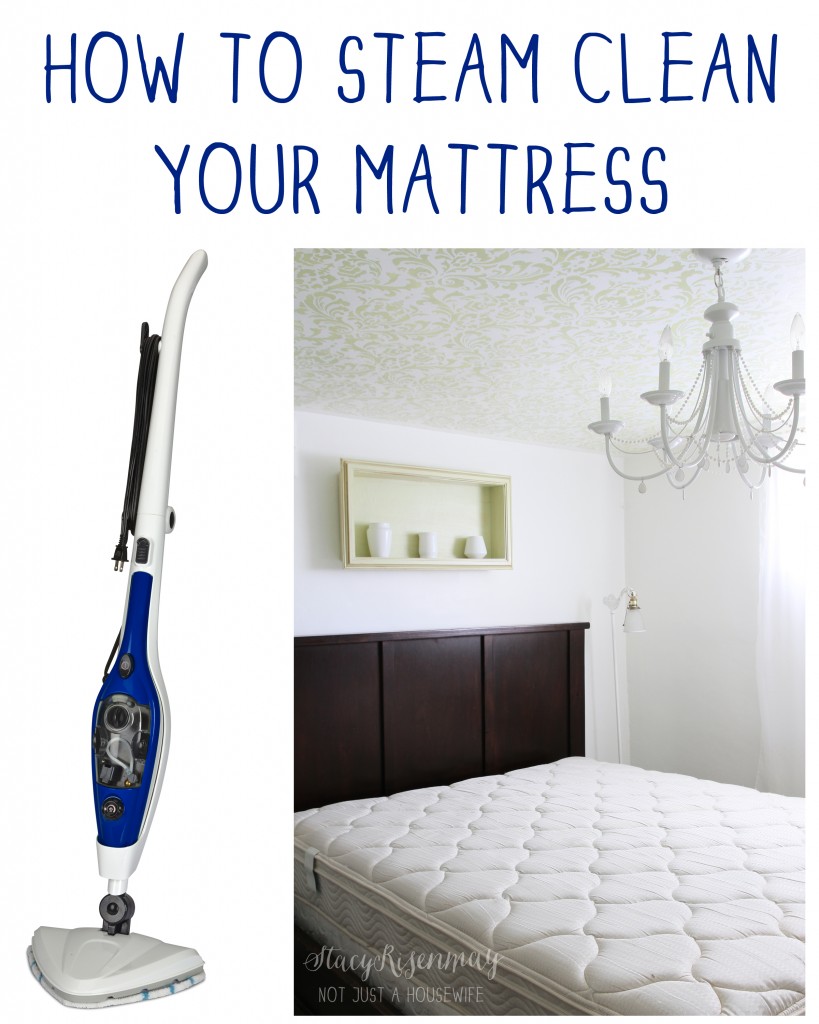
The key piece is your steam cleaner. Not all steamers are made equal for mattress work. You want one that produces continuous steam rather than short bursts, and one with a wide enough attachment to cover surface area without taking all day. I've had great results with both canister-style steamers and handheld units, though the canister style usually gives you more power and longer steam time.

Step by Step How to Clean a Mattress With a Steam Cleaner
Step 1: Strip the Bed and Vacuum Thoroughly
Before you even think about firing up the steamer, get all the bedding off. Sheets, pillows, mattress protector, everything. Toss the sheets in the wash right away. Then take your vacuum and go over the entire mattress surface, including the sides. Pay extra attention to the seams and crevices, because that's where dust loves to hide.
I like to use the crevice tool along the edges and the upholstery brush for the flat surfaces. A good vacuuming removes the loose debris so the steam can focus on the stuff that's actually stuck in the fabric. If you skip this step, you'll just be pushing dirt around with the steam.
Step 2: Pre-Treat Stains (If You Have Them)
Old urine stains, sweat marks, or mystery yellow spots benefit from a little pre-treatment. My go-to is a simple paste of baking soda and water, applied directly to the stain and left for about 15 minutes. For tougher stains, a mix of hydrogen peroxide, dish soap, and baking soda works wonders. Just dab it on, don't rub, and let it sit.
Once the pre-treatment has done its job, vacuum up the baking soda residue. Now your mattress is ready for the main event.
Step 3: Test a Small Area First
This is the step most people skip, and it's how I learned to always be cautious. Find a hidden corner of the mattress, usually the underside or a back edge, and test your steam cleaner there. Some mattress fabrics, especially older ones or those with delicate covers, can react poorly to high heat or moisture. Better to find out in a small spot than ruin your entire sleeping surface.
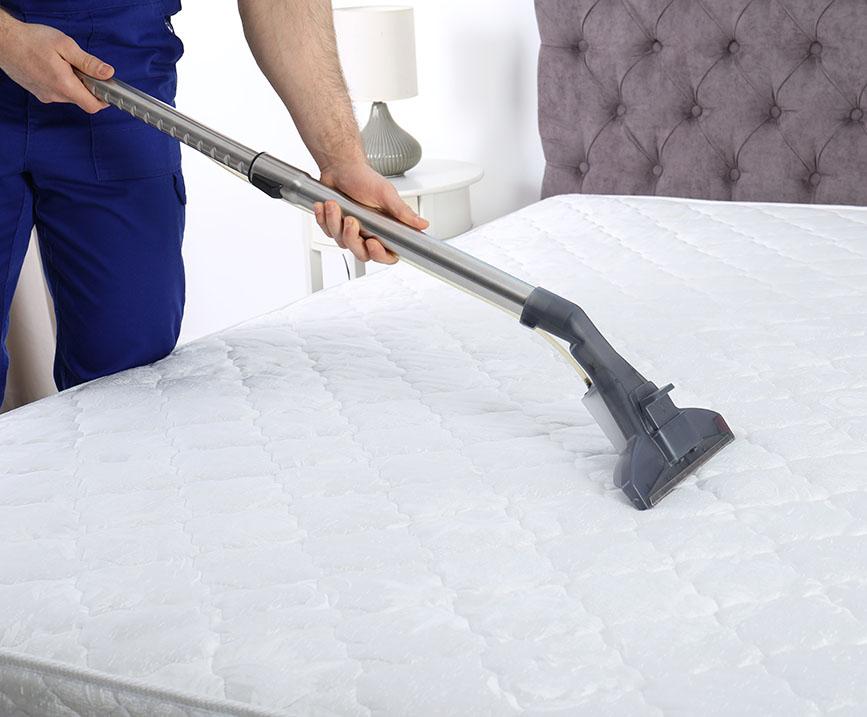
Step 4: Steam the Mattress in Sections
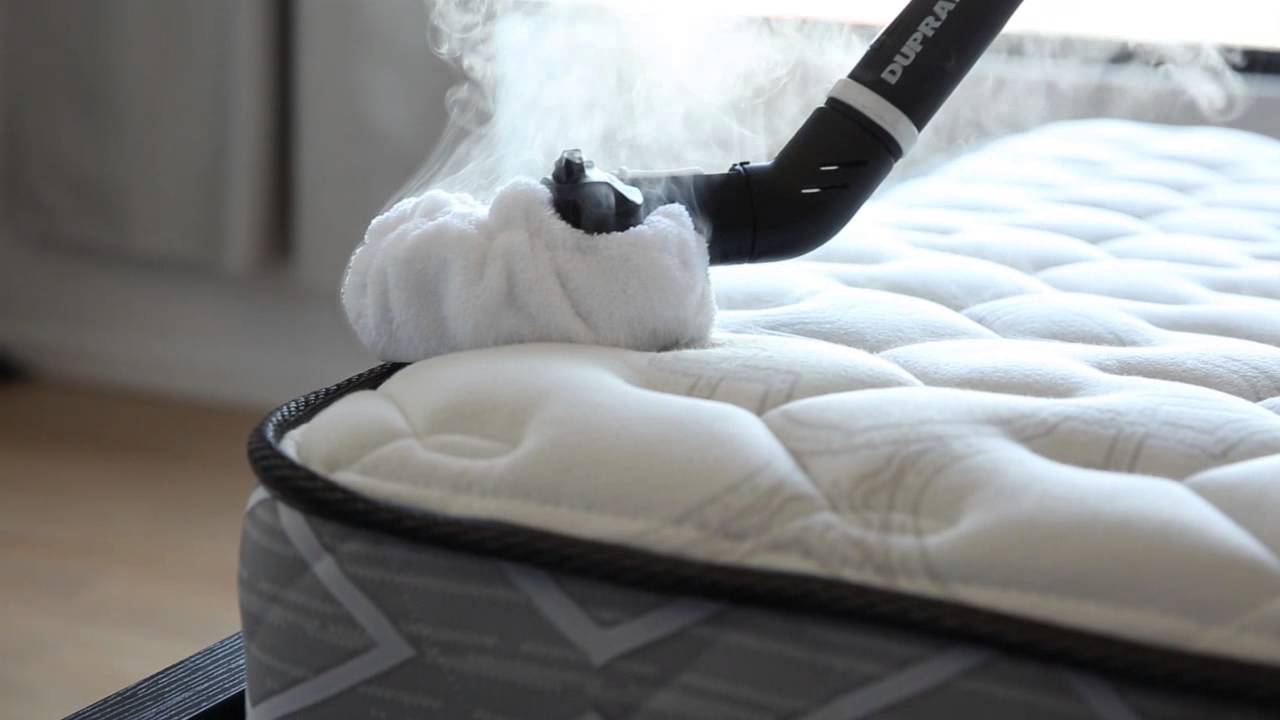
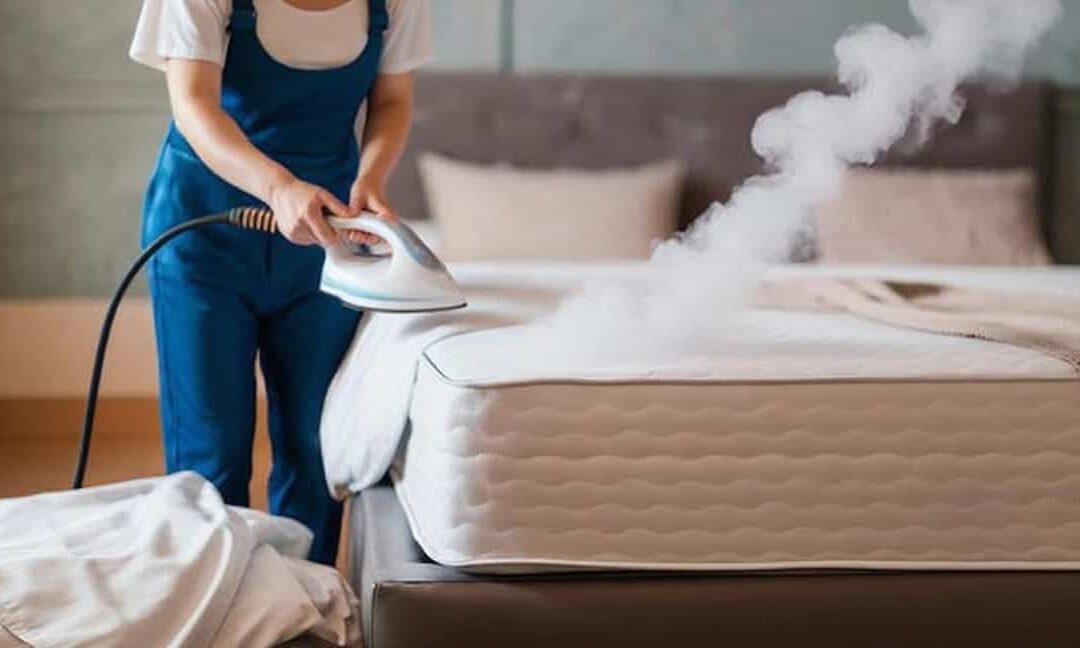
Now we're getting to the good part. Fill your steam cleaner with distilled water (tap water can leave mineral deposits), turn it on, and let it heat up fully. Working in sections about 2 feet by 2 feet, pass the steam attachment slowly over the mattress surface. You don't need to press hard. Let the steam do the work.
Hold the nozzle close enough that you can see the fabric slightly dampening, but not so close that water is pooling. As you steam each section, immediately wipe it down with a clean white microfiber cloth. This lifts the grime that the steam is loosening. Switch cloths often, or you'll just be spreading dirt back around.
I usually work in straight lines, going from the head of the bed to the foot, then moving over. It takes me about 20-30 minutes to do a queen-sized mattress thoroughly. Don't forget the sides! A lot of people forget the vertical surfaces, but dust and skin cells live there too.
Step 5: Optional Baking Soda Refresh
If your mattress has any lingering odors, and most do, this is the time to address them. After steam cleaning, sprinkle a generous layer of baking soda over the entire mattress surface. Let it sit for at least 8 hours, ideally longer. The baking soda absorbs moisture and neutralizes odors like nothing else.
I usually do this step in the morning and let the mattress sit all day while I'm at work. When I get home, I vacuum up the baking soda thoroughly, and the mattress smells fresh and clean. It feels like a whole new bed.
Step 6: Dry Completely Before Making the Bed
This is crucial. Even though steam cleaning uses minimal moisture, your mattress is still a little damp. Open windows, turn on fans, or use a hairdryer on a cool setting to speed up the drying process. I'd recommend waiting at least 4-6 hours before putting sheets back on, just to be safe.
Putting bedding on a damp mattress is one of the fastest ways to invite mold and mildew into your bedroom. I've made this mistake once, and the musty smell that developed took weeks to get rid of. Learn from me. Be patient.
Common Mistakes to Avoid When Steam Cleaning a Mattress
After years of cleaning mattresses for myself, friends, and even a few clients, I've seen the same mistakes pop up again and again. The biggest one is over-saturating the mattress. More steam is not better. If you see water pooling or the fabric getting soggy, back off. You're trying to sanitize, not soak.
Another common error is using the wrong attachment. Some steamers come with brushes that are great for tile or grout but too abrasive for mattress fabric. Use a soft fabric or upholstery tool, or just the bare nozzle with a cloth wrapped around it. The goal is gentle steam contact, not scrubbing.
Skipping the vacuum step is another big one. I know it's tempting to just go straight to steaming, but you'll get dramatically better results if you vacuum first. Think of it like washing dirty dishes. You scrape off the big stuff before you soap them up.
Finally, don't ignore the manufacturer's care instructions. Some mattresses, especially memory foam or pillow-top styles, have specific cleaning guidelines. Violating them could void your warranty. When in doubt, check the tag or the manufacturer's website.
How Often Should You Steam Clean Your Mattress?
The general recommendation is to deep clean your mattress every 6 months, but it really depends on your situation. If you have allergies, asthma, or pets that sleep on the bed, every 3-4 months is better. If you're a single adult with no pets and no allergies, once a year might be enough.
Between deep cleanings, there are a few things you can do to keep things fresh. Wash your sheets weekly in hot water. Use a washable mattress protector and launder it monthly. Air out your bed every morning by pulling back the covers for 15-20 minutes before making it. These small habits make a huge difference in how often you need to do the deep clean.
I personally stick to a quarterly schedule. It's become part of my seasonal cleaning routine, like rotating the wardrobe or cleaning the windows. Once you get in the habit, it doesn't feel like a chore anymore.
Benefits of Regularly Steam Cleaning Your Mattress
The benefits go way beyond just having a nice-smelling bed. Regular steam cleaning can actually extend the life of your mattress. Dust mites, body oils, and moisture all break down the fibers and foam over time. Removing them keeps the materials in better shape for longer.
Your sleep quality improves too. If you've been waking up congested, sneezing, or with itchy skin, your mattress might be the culprit. Dust mite allergies are incredibly common, and most people don't even realize their bed is the source. Steam cleaning kills those mites and removes their waste, which is what most people are actually allergic to.
There's also the peace of mind factor. Knowing your bed is truly clean, not just sheet-level clean, feels great. I sleep better knowing that the surface I'm lying on for 7-8 hours every night isn't a playground for bacteria and allergens.
Can You Use a Steam Cleaner on Any Type of Mattress?
Not all mattresses are created equal when it comes to steam cleaning. Innerspring mattresses are generally the easiest to steam clean because they handle moisture well and have a sturdy structure. Latex and memory foam mattresses can also be steam cleaned, but you need to be extra careful not to oversaturate them. Foam absorbs moisture more readily and takes longer to dry.
Hybrid mattresses with both coils and foam fall somewhere in the middle. Use the gentlest approach possible and make sure the mattress dries completely. Pillow-top mattresses, with their extra layers of cushioning, can be a bit trickier. The steam can get trapped in those layers, so go slow and use less steam.
What about those expensive smart mattresses with air chambers and electronics? Steam cleaning is definitely not recommended for those. Spot clean only, and follow the manufacturer's instructions to the letter. The last thing you want is water getting into electrical components.
Tips for Maintaining a Fresh Mattress Between Deep Cleans
Prevention is always easier than cure. Using a high-quality, waterproof mattress protector is the single best thing you can do. It creates a barrier against sweat, spills, and allergens, and most protectors are machine washable. I replace mine every 2-3 years or whenever it starts showing wear.
Rotating your mattress every 3-6 months also helps. It distributes wear evenly and prevents body impressions from forming. Some mattresses can be flipped too, though many modern ones are one-sided. Check your manufacturer's guidelines.
Keep your bedroom cool and dry. Dust mites thrive in warm, humid environments. Running a dehumidifier or air conditioner in your bedroom can significantly reduce dust mite populations. Aim for humidity levels between 30-50% if possible.
Finally, don't eat in bed. I know, I know, it's a tough habit to break. But food crumbs attract dust mites and can create stains that are nearly impossible to remove. If you must have a midnight snack, at least use a tray and clean up immediately.
Frequently Asked Questions About How to Clean Mattress With Steam Cleaner
Is it safe to steam clean a memory foam mattress?
Yes, but you need to be cautious. Use low steam settings and keep the nozzle moving. Don't hold it in one spot for more than a few seconds. Memory foam absorbs moisture easily, so allow extra drying time, at least 8-10 hours, before putting sheets back on.
How long does it take a steam-cleaned mattress to dry?
Typically 2-4 hours for innerspring mattresses and 4-8 hours for memory foam or latex. Good ventilation speeds this up significantly. A fan pointed at the mattress can cut drying time in half. The mattress should feel completely dry to the touch before you make the bed.
Can steam cleaning remove old urine stains from a mattress?
Steam cleaning can significantly improve old urine stains, especially when combined with an enzyme-based pre-treatment. However, stains that have set for years may not disappear completely. The sooner you treat urine stains, the better your results will be. Multiple treatments are sometimes necessary for stubborn stains.
Will steam cleaning damage my mattress warranty?
It depends on the manufacturer. Many warranties are voided if you use any liquid cleaning method. Before steam cleaning, check your warranty documentation or call the manufacturer directly. Some companies have approved cleaning methods that won't void your coverage. When in doubt, professional cleaning is usually the safer bet for warranty purposes.
Do I need to use any cleaning solution with the steam cleaner?
No, plain water steam is effective on its own. In fact, most manufacturers recommend using only water in steam cleaners to prevent residue buildup and damage to the machine. If you want extra cleaning power, apply cleaning solutions to the mattress surface before steaming, but don't put them in the steam cleaner's water tank.
How do I get rid of the musty smell after steam cleaning my mattress?
If your mattress smells musty after cleaning, it usually means it didn't dry completely. Increase ventilation immediately by opening windows, running fans, or using a dehumidifier. Baking soda sprinkled on the surface and left for several hours can also help absorb odors. If the smell persists after a few days, you may have a deeper moisture issue that requires professional attention.
Conclusion
Learning how to clean a mattress with a steam cleaner is one of those skills that pays off in better sleep, fewer allergies, and a longer-lasting bed. It might seem like a big project the first time, but once you've done it, you'll realize it only takes about 30-45 minutes of active work, and the results are absolutely worth it.
Start by gathering your supplies, vacuuming thoroughly, pre-treating any stains, and then working in sections with your steam cleaner. Don't forget to dry the mattress completely before making the bed, and consider a baking soda treatment for extra freshness. With the right approach, your mattress can feel almost as good as new, and you'll sleep better knowing it's truly clean.
If you've been putting off deep cleaning your mattress, today is the perfect day to start. Your future well-rested self will thank you. And if you have any questions or want to share your own steam cleaning tips, drop a comment below. I'd love to hear how it goes!