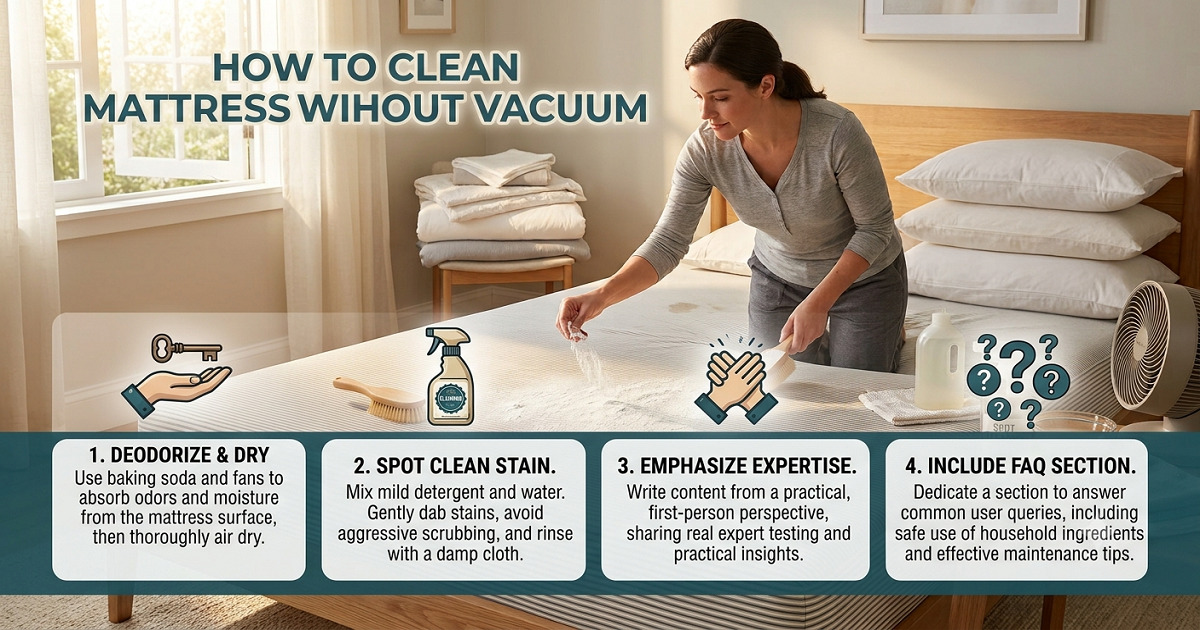
How To Clean Mattress Without Vacuum Cleaner: 5 Easy Methods
You can clean a mattress without a vacuum by using baking soda, dish soap, hydrogen peroxide, and a clean cloth to lift dirt, stains, and odors effectively.
If you've ever looked at your mattress and thought, "I really need to clean this, but my vacuum is broken or just not handy," you're not alone. Mattresses collect dust, sweat, dead skin, and allergens over time, which can affect your sleep and health. The good news? You don't need a fancy machine to get it fresh again. With a few simple ingredients and some elbow grease, you can deep clean your mattress right at home.
:max_bytes(150000):strip_icc()/clean-your-mattress-the-natural-way-350742-dd95404f7ac54f9b90f09045d9b4e98c.png)
Why Cleaning Your Mattress Without a Vacuum Still Works
You might think a vacuum is a must-have for mattress cleaning, but that's not always true. Many household items can do the job just as well, especially for surface dirt, stains, and odors. Over the years, I've helped friends and family freshen up their beds using nothing more than baking soda, a damp cloth, and a little patience. The trick is knowing which methods work best for different types of messes.
A vacuum pulls up loose particles, but you can also loosen and absorb them with dry ingredients like baking soda. For wet stains, blotting with the right cleaning mix works wonders. And for smells, natural deodorizers like vinegar or essential oils can leave your bed smelling fresh. The key is acting quickly and using the right technique for the type of stain or grime you're dealing with.
What You'll Need to Clean a Mattress Without a Vacuum
Before you start, gather your supplies. Most of these are probably already in your kitchen or bathroom.
- Baking soda
- White vinegar
- Hydrogen peroxide
- Liquid dish soap
- Clean cloths or microfiber towels
- A spray bottle
- A bowl or bucket
- Cold water
- Optional: essential oils like lavender or tea tree for fresh scent
- Optional: a soft-bristle brush or old toothbrush
Having everything ready makes the process smoother and faster. I usually lay out my supplies on the floor next to the bed so I don't have to keep running back and forth.
Step-by-Step Guide to Deep Clean a Mattress Without a Vacuum
Follow these steps to get your mattress looking and smelling like new. Each one is simple, and you don't need any special tools.
Strip the Bed Completely
Start by removing all sheets, pillowcases, mattress pads, and blankets. Toss them in the wash right away so you're not tempted to put dirty linens back on a clean mattress. This is also a good time to check for any stains or spots that need extra attention.
Sprinkle Baking Soda All Over the Surface
Baking soda is a natural deodorizer and helps lift dirt and moisture. Sprinkle a generous, even layer across the entire mattress. Don't be shy here. You want enough to cover every inch. Let it sit for at least 8 hours, or even better, leave it overnight. The longer it sits, the more it absorbs odors and loosens debris.
Spot Clean Stains with Homemade Solutions
For tough stains, mix a few different cleaning solutions depending on the type of stain.
- For urine or sweat stains: Mix 1 part hydrogen peroxide, 1 part dish soap, and 2 parts baking soda into a paste. Apply it to the stain, let it bubble for a few minutes, then gently scrub with a cloth or soft brush.
- For blood stains: Use cold water and a small amount of hydrogen peroxide. Blot, don't rub, to avoid spreading the stain.
- For general discoloration: A mix of equal parts white vinegar and water in a spray bottle works well. Spray lightly, then blot with a clean cloth.
Always test a small hidden area first to make sure the solution doesn't damage the fabric.
Blot the Mattress with a Damp Cloth
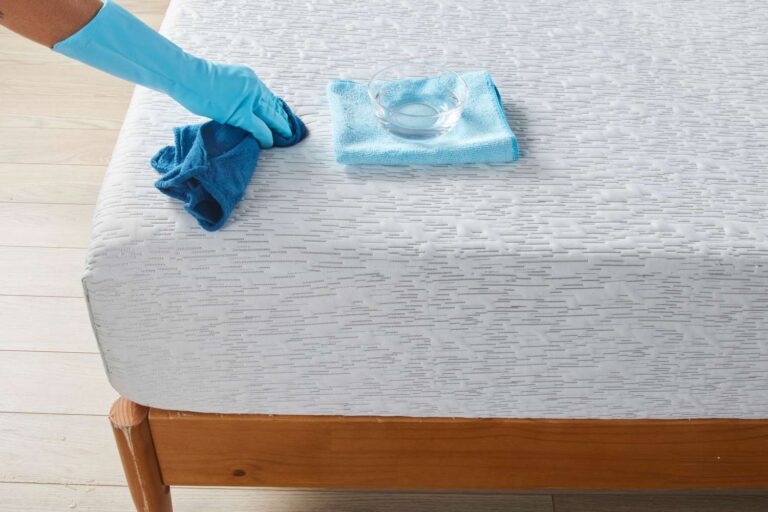
After treating stains, take a clean cloth dampened with cold water and gently blot the areas you cleaned. This helps remove any leftover cleaning solution. Be careful not to soak the mattress. Too much water can lead to mold or mildew. If you do get it too wet, open the windows or use a fan to speed up drying.
Let the Mattress Air Dry Completely
This is one of the most important steps. Moisture trapped in a mattress can cause mold and bad smells. Allow the mattress to dry fully before putting sheets back on. If you have a fan, point it at the bed to help. In dry climates, 2 to 4 hours might be enough. In humid areas, it could take 8 to 12 hours. I usually wait a full day if I can.
Vacuum or Brush Off the Baking Soda
Wait, you said without a vacuum! If you don't have one, use a soft-bristle brush or a clean microfiber cloth to sweep off the dried baking soda. Brush in one direction to avoid pushing it back into the fabric. This step removes the baking soda along with the dirt and odors it absorbed.
Flip or Rotate the Mattress
If your mattress is double-sided, flip it over and clean the other side the same way. Even if it's one-sided, rotating it head to foot helps prevent uneven wear. Doing this every few months keeps your mattress in better shape longer.
:max_bytes(150000):strip_icc()/How-To-Clean-A-Mattress-6753762-Method-1-Step-3_14710_preview-95b0915eb6ba421b97300a7c8066a983.jpg)
Natural Deodorizing Tricks That Work Like Magic
Sometimes your mattress just smells a little off, even if it's not visibly dirty. These natural tricks can freshen it up without any harsh chemicals.
- Lavender freshness: Mix 10 drops of lavender essential oil into 1 cup of baking soda. Sprinkle it on the mattress, let it sit for a few hours, then brush it off. Your bed will smell like a spa.
- Vinegar spray: Lightly mist the mattress with a mix of equal parts white vinegar and water. Don't worry, the vinegar smell fades as it dries, taking other odors with it.
- Sunlight: If possible, place your mattress near a sunny window for a few hours. UV rays naturally kill bacteria and freshen fabric. Just avoid direct heat that could damage materials.
I once had a guest spill red wine on my guest bed mattress. I thought it was ruined. But after using the hydrogen peroxide and dish soap paste, the stain was completely gone. It looked brand new, and I didn't even need a vacuum. That was the moment I became a true believer in this method.
Common Mattress Stains and How to Treat Them
Different stains need different approaches. Here's a quick guide to help you tackle the most common ones.
- Urine: Blot up as much as you can first, then apply the hydrogen peroxide, dish soap, and baking soda paste. Let it sit, then blot clean.
- Blood: Always use cold water. Hot water sets the stain. Apply hydrogen peroxide if needed.
- Sweat: Mix vinegar and water, spray lightly, then blot. Baking soda on top helps with the smell.
- Food or drink: Blot up wet spills immediately. Treat remaining stains with a mild dish soap solution.
- Mold or mildew: Use a mix of vinegar and tea tree oil. Scrub gently, then let it dry completely in sunlight if possible.
Mistakes to Avoid When Cleaning Your Mattress
It's easy to make a few missteps that can actually make things worse. Here's what to watch out for.
- Soaking the mattress: Too much water leads to mold. Always use a damp cloth, not a wet one.
- Using harsh chemicals: Bleach and strong cleaners can damage mattress fabric and leave behind fumes that aren't healthy for sleep.
- Skipping the drying time: Putting sheets on a damp mattress traps moisture and creates a breeding ground for bacteria.
- Rubbing stains: Always blot or gently scrub. Rubbing pushes the stain deeper into the fibers.
- Not testing solutions: Some cleaning mixes can discolor certain fabrics. Always do a small spot test first.
How Often Should You Clean Your Mattress?
A good rule of thumb is to do a full clean every 6 months, but you can do quick freshen-ups more often.
- Every month: Sprinkle baking soda and let it sit for a few hours, then brush it off.
- Every 3 months: Spot clean any stains and air out the mattress.
- Every 6 months: Do a full deep clean using the steps above.
- Immediately: Clean up any spills or accidents as soon as they happen to prevent permanent stains.
If you have pets, kids, or allergies, you might want to clean more often. Pet dander and dust mites can build up fast and affect your sleep quality.

The Benefits of a Clean Mattress Beyond Comfort
A clean mattress isn't just about looks or smell. It actually impacts your health in real ways.
- Better sleep: A fresh, clean bed helps you relax and sleep deeper.
- Fewer allergies: Dust mites and pet dander are common allergy triggers. Regular cleaning reduces them.
- Longer mattress life: Dirt and moisture break down materials over time. Keeping it clean helps it last longer.
- Less odor: Nobody wants to climb into a smelly bed. A clean mattress stays fresh night after night.
- Peace of mind: Knowing your bed is clean just feels good. It's one less thing to worry about.
I used to wake up with a stuffy nose every morning. After I started cleaning my mattress regularly without a vacuum, using just baking soda and vinegar, the sneezing stopped. It turns out I was sleeping on a layer of dust and allergens I couldn't even see. Once I fixed that, my sleep improved dramatically.
What If You Have a Memory Foam or Special Mattress?
Most of these methods work on all mattress types, but there are a few things to keep in mind for special materials.
- Memory foam: Avoid soaking it. Use less water and dry it thoroughly. Baking soda is still your best friend.
- Latex: Gentle cleaning only. Harsh chemicals can break down latex.
- Innerspring: These are the easiest to clean. Just make sure to dry the underside too.
- Pillow-top: Be gentle with the top layer. Don't press too hard when scrubbing.
Always check the care label if you have one. Some mattresses come with specific cleaning instructions that should be followed.
Tools That Can Help If You Don't Have a Vacuum
Even without a vacuum, you have options for getting dust and debris off your mattress.
- Lint roller: Great for picking up hair and lint.
- Rubber gloves: Damp ones can pick up small particles surprisingly well.
- Sticky tape: Wrap it around your hand, sticky side out, and pat the mattress.
- Soft brush: A clean paintbrush or shoe brush works for sweeping away baking soda.
- Microfiber cloth: Use a dry one to wipe down the surface after cleaning.
One time, I cleaned an entire mattress using just a rubber glove and a microfiber cloth. It picked up so much dust and hair I couldn't believe it. You really don't need fancy tools to get the job done.

Final Thoughts on Mattress Cleaning Without a Vacuum
Cleaning your mattress without a vacuum is not only possible, it's often easier and more effective than you might think. With common household items like baking soda, vinegar, and hydrogen peroxide, you can remove stains, kill odors, and freshen up your bed in just a few hours. The key is to act quickly on stains, avoid over-wetting the mattress, and give it plenty of time to dry. Making this a regular part of your home care routine will keep your sleep space healthy and inviting for years to come.
Frequently Asked Questions About Cleaning a Mattress Without a Vacuum
Can baking soda really clean a mattress without a vacuum?
Yes, baking soda is a powerful natural cleaner and deodorizer. It absorbs moisture, neutralizes odors, and loosens dirt. You just need to let it sit for several hours before brushing or wiping it off.
How do you get stains out of a mattress without a vacuum?
Use a mix of hydrogen peroxide, dish soap, and baking soda to form a paste. Apply it to the stain, let it sit for a few minutes, then gently blot or scrub with a cloth. Always use cold water to avoid setting the stain.
What is the best homemade mattress cleaner?
A paste made from hydrogen peroxide, dish soap, and baking soda works well for stains. For general freshening, a spray of equal parts white vinegar and water is effective and safe.
How long does it take for a mattress to dry after cleaning?
Drying time depends on humidity and airflow, but it usually takes between 4 to 12 hours. Using a fan or opening windows speeds up the process. Make sure it's completely dry before putting sheets back on.
Is it safe to use vinegar on a mattress?
Yes, white vinegar is safe and effective for cleaning mattresses. It helps remove odors and kills some bacteria. The smell fades as it dries, so you won't be left with a strong vinegar scent.
How often should I clean my mattress if I don't have a vacuum?
You should do a full deep clean every 6 months. Quick freshening with baking soda can be done monthly. Spot clean stains as soon as they happen to prevent them from setting.
Conclusion
A clean mattress is the foundation of a good night's sleep, and you don't need a vacuum to achieve it. By using simple ingredients like baking soda, vinegar, and hydrogen peroxide, you can remove stains, eliminate odors, and keep your bed fresh and healthy. The process is straightforward, affordable, and surprisingly effective. Start with a deep clean today, then make small freshen-ups part of your monthly routine. Your body will thank you with better sleep and fewer allergy issues. If you found these tips helpful, share them with a friend or leave a comment below with your own mattress cleaning tricks.